Convert More Trials: Email Sequences for SaaS Free Trials
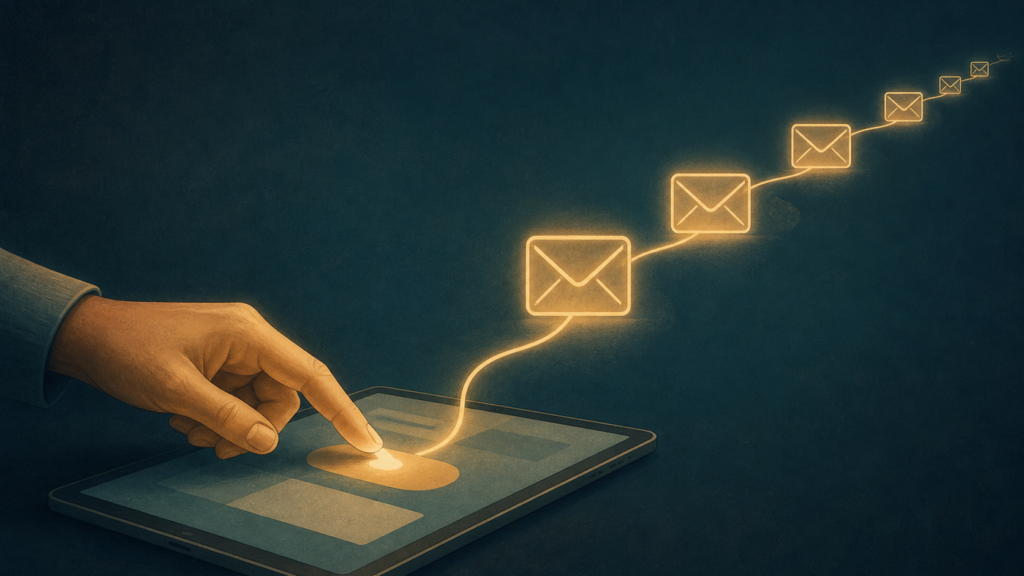
Email sequences can turn SaaS trial signups into paying customers by showing users how the product works, helping with setup problems, and giving them a reason to continue.
For many SaaS companies, the free trial is a user’s first real experience with the product. That first week matters. Some users sign up, look around for five minutes, and disappear. Others find one useful feature, build a habit around it, and eventually pay. Email can move more users toward that second path—but only when each message has a job.
Honestly, a busy sequence is not automatically a useful one. The email has to arrive when the user can do something with it.
This article explains how to build trial email sequences that support activation and paid conversion. It covers user segments, message timing, calls to action, testing, measurement, and the mistakes that make people unsubscribe.
What are email sequences for SaaS free trials that convert?
They are automated series of emails that guide trial users from signup toward regular product use and, eventually, a paid plan. The messages arrive when they are useful, explain how the product can help, address common problems, and point users toward one next step. A good sequence does not try to sell the whole product at once. It helps the user get a result.
Most guides say the sequence should sell the product. That’s only half right. First, it has to help the user succeed.
Defining the purpose and core components of a high-converting free trial email sequence.
A trial sequence works like an onboarding guide with sales in the background. Its job is to close the gap between “this looks interesting” and “we use this every week.” That means showing the product in context, explaining the harder parts, and helping users reach the point where the product clicks.
The sequence should be automated. Signup, feature use, and inactivity can trigger different messages. It should also be segmented. Someone who has not logged in for 48 hours needs a different email from someone who has already used the main feature several times. Every message needs a clear value proposition. Instead of saying “New reporting dashboard,” explain what the user can do with it: “See your weekly numbers in one place.”
Our take: those three details—automation, segmentation, and a clear value proposition—matter more than clever subject lines.
Common messages include a welcome email, setup instructions, feature guidance, examples from similar customers, answers to pricing or integration questions, and reminders about the trial deadline. Each email should ask for one main action, such as exploring a feature, inviting a teammate, booking a demo, or upgrading.
Distinguishing between generic marketing emails and targeted free trial conversion sequences.
Generic marketing emails speak to a broad audience. They might announce a feature, share company news, or link to an article. Those messages can support brand awareness, but they are not built around the immediate needs of someone who started a trial yesterday.
A trial sequence is narrower. It responds to the user’s situation. A general marketing email might say, “Our new AI analytics feature is here.” A trial email might say, “Connect your data in three steps and view your first AI generated report.” The second message gives the user something to do now.
Why does that distinction matter? Because a trial user is already in motion. They do not need another announcement. They need the next useful move.
These sequences also respond to behavior. If a user has not invited anyone, the next email can explain how collaboration works. If they have spent time in the analytics area, the sequence can offer a related tip. The email then feels more like help than another advertisement.
Why do well-crafted email sequences matter for SaaS free trial conversion?
Most trial users need some direction. Emails can explain the product, remind people what they came to accomplish, and remove small obstacles before those obstacles become a reason to leave. When the sequence fits the user’s situation, more people reach the useful parts of the product and can decide whether the paid plan is worth it.
Understanding the role of email in guiding users from sign-up to activation and subscription.
A new trial can feel confusing, especially when the product has a large dashboard and several possible starting points. A welcome email can point to one simple task. The next message can explain how to complete it. Later emails can introduce related features once the user has a reason to care about them.
Without that direction, many users log in once, fail to find a useful starting point, and leave. A project management product might ask users to create their first project, invite a teammate, and assign a task. Each step gives the user a small result instead of asking them to understand the entire platform at once.
We tried this kind of staged onboarding on a complicated workflow, and the lesson was plain: one useful action beats a tour of every menu.
Email can also answer questions before they turn into support problems. It can explain an integration, link to a short guide, or show what to do after a setup step fails. That support matters during a short trial because users rarely wait long for an answer. If the product feels difficult on day two, they may already be gone by day three.
Quantifying the impact of email nurturing on trial-to-paid conversion rates and customer lifetime value.
The exact effect depends on the product, audience, and trial design, so broad claims need caution. The numbers are still easy to measure. Suppose a company converts 5% of trial users without a dedicated sequence. If targeted emails raise that rate to 10%, the difference is substantial even before retention enters the picture.
Counter to the usual advice, open rates are not the outcome to celebrate. A sequence can win attention and still fail to create paying customers.
Personalized onboarding can also affect customer lifetime value. Users who understand the product and fit it into their regular work are less likely to cancel soon after paying. A message about an integration the user already relies on may strengthen that habit. A message about an advanced feature may give an existing customer a reason to move to a higher plan later.
Track these effects by comparing users who receive a sequence with a similar group that does not. Look beyond opens. Measure activation, feature use, paid conversion, early cancellations, and support requests. Those numbers show whether the emails changed behavior or merely earned a few extra clicks.
What are the essential stages of a successful free trial email sequence?
Most sequences move through four broad stages: welcome and setup, a first useful action, deeper product use, and the decision to pay. The stages can overlap, and user behavior should determine the timing when possible. Someone who is already active does not need the same reminders as a person who has not returned since signup.
Mapping the user journey from initial welcome to activation, engagement, and conversion prompts.
The first email should arrive immediately. It confirms the account, gives the login link, and points to one useful action. For a project management tool, that might be creating a first project. For a CRM, it might be importing contacts. Do not bury that action below a long product description.
Activation happens when the user completes an action that reveals the product’s value. The sequence should help them get there with short instructions and answers to likely questions. “Import your contacts in three steps” is more useful than “Explore our powerful CRM.”
It works. Keep going.
Once the user completes the first action, later emails can introduce related features. A design tool might explain advanced templates after the user creates a basic design. A marketing platform might mention A/B testing after the user sends a first campaign.
Near the end of the trial, the emails should become more direct. Remind the user what they have done, state when access ends, answer pricing or support questions, and show how to upgrade. A message three days before expiration is usually more useful than a string of vague reminders.
Identifying key touchpoints and user behaviors that trigger specific email communications.
Time based emails are simple, but behavior based emails are often more relevant. Signup can trigger the welcome message. Logging in without completing setup can trigger a short nudge after 24 hours. Failing to connect an email provider can trigger a troubleshooting guide.
Completion can also start a new branch. After a user creates a campaign, the sequence might explain reporting. After someone connects an integration, it might suggest the next setup step. These messages make progress visible without assuming that every user follows the same path.
Inactivity is another useful signal. If a user has not logged in for 72 hours, send a practical reminder rather than “We miss you.” Point them to the unfinished task or show one result they can get quickly. A user who has spent a lot of time with a paid feature may receive a message explaining what happens when the trial ends.
How do you segment users for personalized free trial email sequences?
Segmentation means grouping users by information that changes what they need to hear. Useful signals include signup details, company type, role, stated goal, product activity, and trial length. The aim is not to create dozens of tiny groups. It is to stop sending messages that clearly do not fit the user’s situation.
Using user data, in-app behavior, and demographic information to create targeted segments.
Signup data gives you a starting point. A user’s role, industry, company size, and stated goal can suggest which part of the product matters first. A marketing manager may care about lead generation. A developer may care about the API. A small business may need quick setup and a predictable price, while a large company may ask about permissions and security.
In-app behavior is often more useful than a profile field. Did the user log in several times but skip team invitations? Did they open the reporting area but never create a project? Did they connect one integration and stop? Those actions show where the user is interested or stuck.
Honestly, a profile field can look precise and still tell you very little. Behavior usually exposes the real friction.
Someone who has not completed setup can receive a short tutorial. Someone who uses reporting every day can receive an advanced reporting tip. That is more useful than sending both people the same list of features.
Exploring segmentation strategies based on feature usage, industry, company size, and trial duration.
Feature use is one of the clearest ways to separate users. If a product includes project management, CRM, and analytics tools, a user who spends 80% of the trial in the CRM should not receive a general project management email. Show them better CRM workflows, useful integrations, or a customer example that fits their work.
Industry changes which examples make sense. An online retailer may care about abandoned cart recovery, while a B2B software company may care about lead scoring and pipeline reports. Company size changes the buying questions too. Small teams often want quick setup and low cost. Larger teams may need permissions, security reviews, and custom integrations.
Trial length also affects pacing. A seven day trial needs a compact sequence and quick instructions. A 30 day trial can leave more space between messages. Users who reach the final days without converting can enter a separate sequence that offers help, an extension, or a personal demo.
What types of emails should be included in a high-converting free trial sequence?
A useful sequence usually includes a welcome message, setup help, feature guidance, proof from similar customers, support information, and a clear ending. The exact mix depends on the product. Every email should earn its place by helping the user take a meaningful next step.
Designing welcome, onboarding, feature highlight, value proposition, and urgency emails.
The first message is the welcome email. It confirms the trial, gives the user a login link, and suggests one action. “Start your first project” is better than a long introduction to the company. A two minute setup video can work well if the product has several initial steps.
Onboarding emails should keep each task small. One message might explain how to connect an integration. Another might show how to invite a teammate. Breaking setup into separate actions makes the product feel less demanding.
Feature emails should describe problems and results, not just buttons. “Keep team conversations beside each task” says more than “Our product includes chat.” Screenshots and short GIFs can help when they show the feature clearly.
Value emails connect the product to a result the user cares about. That might mean saving reporting time, reducing manual work, or giving a team one place to see current information. If you have reliable data, use it. If you do not, avoid making up a precise percentage.
As the trial ends, reminder emails should state the deadline and explain what happens next. “Your trial ends in three days” is clear. A final message can link directly to the upgrade page and offer help with questions. Pressure rarely fixes a product that users do not understand.
Incorporating educational content, success stories, and support resources within the sequence.
Educational content can help users move beyond the first setup step. Link to a short tutorial, webinar, or guide that answers a question they are likely to have. A feature email about reporting could link to “Five ways to use weekly reports,” provided the guide is genuinely useful.
Customer stories work best when they describe a result that resembles the user’s goal. A short quote about reducing lead response time is more convincing than a general claim that the product is “powerful.” Use real customers and real numbers.
Make support resources easy to find. Link to the help center, include a support address, or invite the user to reply to the email. A small problem should not end a trial simply because the user cannot find an answer.
How do you craft compelling copy and calls-to-action for free trial emails?
Good trial copy starts with the user’s problem. Explain what the next action will accomplish, keep the language plain, and give the email one main purpose. The reader should know what to do without studying the message.
Applying persuasive writing, benefit-driven messaging, and clear, concise language.
Start with the user’s job to be done. Why did they sign up? What are they trying to finish, measure, or replace? “Our platform has advanced analytics” is weak. “See which campaigns bring in customers before you spend more money” gives the feature a reason to matter.
Use the “so what?” test. After mentioning a feature, ask what changes for the user. If the answer is unclear, rewrite the sentence. Keep urgency and social proof in proportion. “Your trial ends in three days” is useful. Five warnings, two discounts, and a claim about joining 10,000 businesses may feel desperate.
Yes, this contradicts the instinct to include every selling point.
Keep one subject in each email. Short paragraphs help people scan, and technical terms are fine when the audience uses them every day. The tone should sound like a helpful product expert, not a salesperson trying to win an argument.
Optimizing CTAs for visibility, clarity, and specific user actions.
A call to action should be easy to see and understand. “Click here” says almost nothing. “Create your first project” tells the user what will happen. The button should lead directly to the relevant screen instead of dropping the user on the main dashboard.
Use one main CTA. A secondary link to support can sit below it, but do not ask the user to start a project, invite a team, read a guide, book a demo, and upgrade in the same message. On mobile, make the button large enough to tap and place it near the action it describes.
Test the wording, placement, and destination. Compare “Activate your account” with “Start your first project,” then track what users do after clicking. A higher click rate is not automatically better if users do not complete the next step.
When should you send free trial emails for maximum impact?
Send the welcome email immediately, help users reach a useful result early, and focus more directly on conversion as the deadline approaches. The right schedule depends on trial length and behavior. More emails are not automatically better.
Determining timing and frequency based on trial length, engagement, and triggers.
A seven day trial may need three or four messages because there is little time to waste. A 30 day trial can use five to seven messages with more room between them. The first message should arrive right away. Later messages should respond to what the user has or has not done.
If a user has not logged in after 24 hours, send a short note with a direct link to the first task. If they have used one feature repeatedly, follow up with an advanced tip. Active users may need fewer general reminders and more specific ideas.
Behavioral triggers might include:
- Feature adoption: After a user completes setup, suggest the next useful action.
- Usage limits: If someone reaches 80% of a plan limit, explain the available options before access changes.
- Inactivity: Offer a practical way back into the product instead of sending a generic reminder.
- Milestones: After a first invoice, campaign, or report, acknowledge the result and point to the next step.
Interest usually fades during a trial, but the pattern differs by product. Send more help early, when users are deciding whether the product makes sense. Later messages should reinforce what they have already accomplished and answer the questions that might stop them from paying.
Implementing A/B testing for send times and sequence delays.
Test one change at a time and start with a clear baseline. For a 14 day trial, you might compare emails on days 1, 3, 7, 10, and 13 with emails on days 1, 4, 8, 12, and 14. Track activation and paid conversion, not only open rates.
You can also compare a feature email sent 24 hours after welcome with one sent 48 hours later. Test weekday and weekend timing when the message is not triggered by behavior. B2B users may respond during work hours, while consumer products may see activity later in the day, but your own data matters more than a general rule.
Tools such as HubSpot, Customer.io, and Braze can run these tests. Keep notes about the hypothesis, audience, sample size, and result. A winning subject line may stop working when the audience or product changes.
How do you measure and optimize the performance of free trial email sequences?
Track opens and clicks, but give the most weight to activation and trial-to-paid conversion. Combine email data with product analytics so you can see whether a click led to a useful action. Then revise the parts that are not doing their job.
Identifying key metrics such as open rates, click-through rates, conversion rates, and churn.
The Open Rate (OR) can reveal problems with subject lines, sender details, or deliverability. SaaS emails often fall somewhere around 20% to 30%, but the better comparison is your own past performance and audience. Privacy tools also make open rates less reliable than they used to be.
The Click-Through Rate (CTR) shows whether the email gave users a reason to act. A click on “Explore Feature X” matters more when the user then uses Feature X. The Conversion Rate (CR), meaning the share of trial users who become paying customers, is the clearest business outcome.
Also watch unsubscribes, feature adoption, time in the product, support requests, and early churn. Compare users who completed key sequence steps with those who did not. The comparison will not prove that email caused every difference, but it can show where to investigate.
Using analytics tools and A/B testing for continuous improvement.
Your email provider can report opens and clicks. Google Analytics, Mixpanel, or Amplitude can connect those clicks to product actions. For example, track users who clicked “Explore Feature X” and see whether they actually used that feature afterward.
A/B testing works best when the question is specific. Test two subject lines, two CTA labels, or two send delays with comparable groups. You can also compare a five email sequence with a seven email sequence, though larger tests need more users and more time.
Write down the hypothesis before running the test. Use a sample large enough to make the result useful, then apply the winning version and test the next weak point. Do not optimize for clicks while ignoring cancellations. A message that earns attention but attracts users who never activate is not a real improvement.
What are common pitfalls to avoid when building free trial email sequences?
The usual problems are too many messages, generic copy, poor timing, weak support, and ignored feedback. Compliance and deliverability problems can undo the rest. A sequence should help users decide, not trap them in a noisy campaign.
Recognizing and reducing overwhelming messages, generic copy, and ignored feedback.
Email fatigue is easy to create. For a seven day trial, three to five messages may be enough. Longer trials can use up to seven, but every email still needs a reason to exist. Guide users toward one or two useful actions rather than listing the entire product.
Generic copy wastes the information users already gave you. A marketing agency should receive examples about client reporting or campaign tracking. A developer may care about API access. Even one relevant sentence can make a welcome email feel less automatic.
Skip this step. No—don’t skip it.
Read support tickets, survey replies, and product analytics together. If many users stop at the same setup screen, change the email that sends them there or add clearer help. Feedback is not a separate research project. It is often sitting in the places your team already checks.
Addressing compliance, deliverability, and brand consistency.
Compliance is part of the sequence design. Follow GDPR, CCPA, and CAN-SPAM requirements, include a clear unsubscribe link, and explain how marketing consent works. Product messages and promotional messages may need separate treatment, especially for users in the European Union.
Deliverability matters just as much. Configure SPF, DKIM, and DMARC. Keep the list clean by removing hard bounces and long inactive addresses. Avoid excessive capitalization, image only emails, and repeated sales language. Watch bounce and spam complaint rates so a sudden change does not go unnoticed.
Keep the email experience consistent with the product. The logo, colors, typography, and tone should feel familiar, but consistency does not mean filling every message with brand slogans. A clear, friendly email that sounds like the support team will usually build more trust than a polished advertisement.
Frequently Asked Questions
How do email sequences directly impact free trial conversion rates for SaaS?
They give users timely help while the product is still new. A useful sequence points to the next action, explains common problems, and reminds users what they can accomplish. That can reduce early drop off and help more people reach the features that support a paid decision.
What’s the optimal number of emails in a free trial sequence to maximize conversions without overwhelming users?
For a seven to 14 day trial, five to eight emails is a reasonable starting point, not a fixed rule. Test a welcome message, a few action focused emails, a support or re engagement message, and a final reminder. If people stop opening, unsubscribe, or ignore the product, reduce the frequency.
Beyond basic onboarding, what content works best for converting trial users?
Show quick wins, relevant customer examples, advanced tips based on actual usage, and direct access to support. A short explanation of what the user can accomplish next is often more useful than another broad feature tour.
How can we segment free trial users for more relevant sequences?
Use signup information such as role, industry, company size, and stated goal. Add product behavior, including features used, setup steps completed, and recent inactivity. Keep the groups practical. Segment only when the difference changes the message or the next action.
What metrics should we track to measure the success of free trial email sequences?
Track opens, clicks, unsubscribes, activation, feature use, and trial-to-paid conversion. Also watch early churn and the actions users take after clicking. Test subject lines, copy, CTAs, and send times, but judge the sequence by whether users reach useful product outcomes and continue paying.