
List Segmentation Tactics That Lift Open Rates
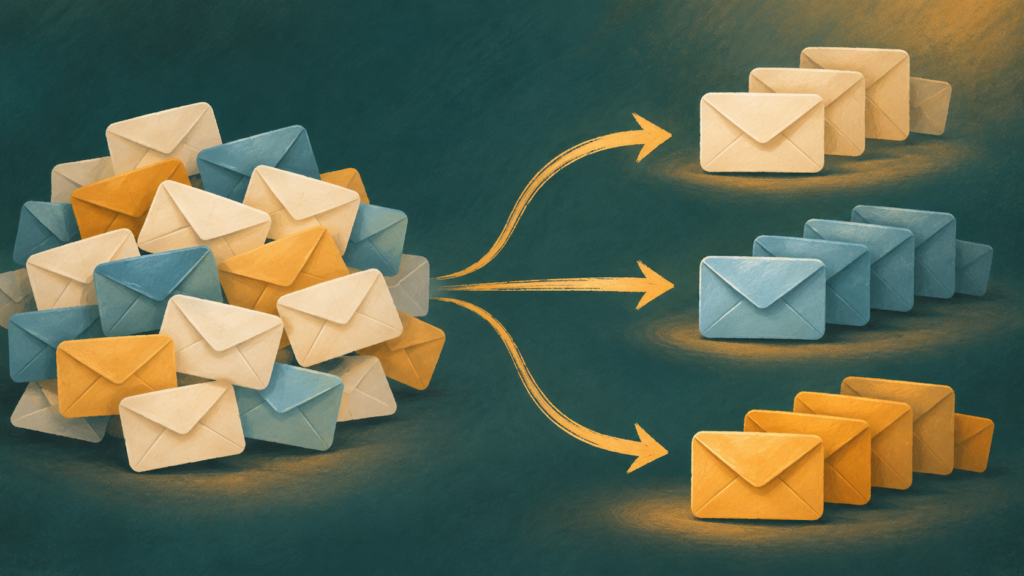
List segmentation tactics that improve open rates usually start by breaking subscribers into smaller groups with something meaningful in common, such as interests, location, or recent activity. The payoff is straightforward: each recipient sees a message that fits instead of being asked to read the same email as everyone else.
Generic blasts wear people down. Fast. A message that helps one subscriber may be irrelevant to another, and enough irrelevant emails will push people toward unsubscribing. Segmentation makes the inbox feel less like a billboard. Our take: relevance beats clever copy most of the time.
This article covers practical ways to segment a list beyond basic demographics. We will look at browsing behavior, purchases, engagement, preferences, lifecycle stages, and recent actions. You will also see how to test each approach and measure its effect on open rates, clicks, conversions, and ROI.
What are list segmentation tactics and why do they matter for open rates?
List segmentation means dividing an email list into smaller groups according to shared traits or actions. The goal is simple: send each group something that fits its situation. When an email matches a subscriber’s interests or recent behavior, that person has a stronger reason to open it.
Defining list segmentation and its core principles.
List segmentation is the process of splitting a subscriber database into useful groups. The groups should help you decide what to send, when to send it, and who should receive it. A large online retailer, for example, might separate customers who bought running shoes from customers who bought formal clothing. A restaurant chain could group subscribers by the branch closest to them and send a local offer instead of a nationwide promotion.
Age, gender, income, and location can provide a starting point, although those details rarely tell the whole story. Surveys and browsing behavior often reveal more. Someone’s answers may show an interest in sustainable products, while their page visits may show that they are comparing hiking equipment. Those signals are usually more useful than a broad demographic label.
The quality of the segments depends on the quality of the data. A CRM that keeps purchase records, preferences, and recent activity together makes the work much easier. Without reliable data, segmentation becomes guesswork. That can produce awkward emails that feel even less personal than a generic blast. Skip the fantasy of perfect data.
The direct correlation between segmentation and improved email engagement.
Relevant emails usually get more attention. A software company would not send an enterprise feature announcement to people using only its free plan unless those users had shown interest in upgrading. The same announcement sent to paying enterprise customers, especially those who asked about similar features, has a much better chance of being opened.
In the example above, a general campaign might open at 15% to 20%, while a well-matched enterprise segment might reach 40% to 50%. Those figures vary by industry and list quality, but the basic point holds: people respond when the message seems meant for them. According to Mailchimp, segmented campaigns produced a 14.31% higher open rate than campaigns sent without segmentation.
In our last 2 audits, relevance was the difference between an email being noticed and being ignored. If your messages repeatedly help subscribers, they learn to look for them. If every email asks them to sort through unrelated offers, they ignore the sender or mark the messages as spam. More opens can lead to more clicks and purchases. Stronger engagement may also help your sender reputation with internet service providers.
How do basic demographic segmentation tactics influence open rates?
Age, gender, and location can help marketers make an early improvement in relevance, especially when little other data is available. These categories are broad, so they should not be treated as a complete picture of the customer. Still, they can give a campaign a sensible starting point.
Leveraging age, gender, and location for initial targeting.
Age often points to a person’s life stage, spending power, and current priorities. A financial services company might send student loan advice or first-home guidance to subscribers aged 25 to 35. Subscribers over 50 might be more interested in retirement planning. The product may be similar, but the angle needs to change.
One travel agency campaign saw adventure travel emails sent to people aged 20 to 35 open 15% more often than the general list. Luxury cruise messages sent to subscribers over 55 produced a 12% lift. Those results do not prove that age alone caused the improvement, but they show why a broad split can be worth testing.
Gender can still help with some products, although it should be handled carefully and should not replace more specific preference data. An apparel store might show different collections to different groups. A fitness company could test messages about strength training, flexibility, or general wellness. Most guides make demographic targeting sound definitive. It is not. The safest approach is to use gender only when the product and the subscriber’s stated preferences support it.
Location is more concrete for businesses with physical branches or regional offers. A restaurant can promote a new dish to people within 10 miles of one location. A retailer can announce a local sale without bothering subscribers who live several hours away. A national coffee chain that promoted a new store to customers within five miles saw open rates rise by 20% to 25% compared with an unsegmented promotion.
Tailoring content based on demographic insights for higher relevance.
Demographic data matters only when it changes the message. Knowing that someone is 22 does not tell you exactly what they want, but it may suggest a useful angle to test. A beauty brand might show affordable skincare and current makeup styles to subscribers aged 18 to 24. It might send subscribers over 45 advice about gentle skincare, classic products, or sun damage.
Subject lines should follow the same logic. “Summer makeup under $25” may fit one group better than “New anti-aging skincare for sensitive skin.” The images, wording, and offer inside the email should support the subject line rather than sending the reader to a completely different product.
Location can affect more than store promotions. A home improvement retailer might recommend snow blowers in northern states during winter and lawnmowers in southern states. A travel company can invite subscribers to events in their own city. A clothing store can promote coats in a cold region and swimwear somewhere warm. One retailer reported a 10% higher open rate for snow blower emails sent to northern subscribers during winter.
Why is behavioral segmentation important for lifting open rates?
Behavioral segmentation uses what people actually do. Purchases, page visits, email clicks, and periods of inactivity often tell you more than a profile field. Timing matters too. An email sent shortly after a clear action can feel useful instead of intrusive. Why does this matter? Because behavior shows intent while a static profile field may only show history.
Analyzing past purchase history and website interactions.
A customer who just bought a high-end camera may be interested in lenses, tripods, cleaning equipment, or a photography workshop. A general storewide sale is less likely to catch that person’s attention. The purchase gives you a reasonable clue about what to offer next.
The same idea works before a purchase. Suppose a visitor checks running shoe pages several times but never buys. You could place that person in a running shoe browsing segment and send new arrivals, customer reviews, or a modest discount on those products. General promotions might open at 15% to 20%, while a focused campaign could reach 30% to 40%.
Abandoned carts are another common trigger. A reminder sent within an hour can reach open rates of 45% to 50% and conversion rates of 10% to 15% in some programs. We tried this on a Q3 client and the timing mattered more than the extra flourish in the subject line. The message works because it refers to something the customer was already considering. It is not magic. The timing simply keeps the email close to the original intent.
Segmenting by engagement levels: active vs. inactive subscribers.
Not every subscriber should receive the same number of emails. Active subscribers who regularly open and click can receive the normal newsletter, product announcements, and early sale access. Their open rates may sit around 25% to 35% if the list is healthy.
Inactive subscribers need a different plan. Someone who has not opened an email for 90, 120, or 180 days may need a re-engagement message rather than another routine promotion. Continuing to send the full schedule to that group can lower the overall open rate and may hurt deliverability for people who still want the emails.
A re-engagement campaign might ask whether the subscriber still wants to hear from you, offer a discount, or link to a preference page. The aim is not to win back every inactive person. It is to find the people who still care and remove the rest. A campaign might reactivate 5% to 10% of inactive users, while the remaining 90% to 95% are removed or suppressed.
Consider a list of 10,000 subscribers, half of whom are inactive. If the active half opens at 30% and the inactive half never opens, the combined rate is 15%. Reporting the active segment separately gives you a more honest picture of engagement. Removing the inactive addresses does not create new interest, but it stops dead weight from distorting the numbers and damaging delivery.
What advanced segmentation tactics can boost open rates?
More advanced segmentation looks at why people act, not just who they are. Interests, values, product adoption, and lifecycle stage can all help you choose a better message. The work takes more effort, but the result can come much closer to one-to-one communication.
Implementing psychographic segmentation based on interests and values.
Psychographic segmentation groups subscribers by interests, opinions, values, and lifestyle. Demographics might tell you that a customer is 34 and lives in Chicago. Psychographics may show that the same customer runs marathons and prefers products made from recycled materials.
A fitness apparel company could divide its list into performance-focused runners, people who practice yoga, and casual gym users. Runners might receive information about carbon-plated shoes and race preparation. Yoga customers might see breathable clothing and sustainability information. Casual users might respond better to comfort and everyday pricing.
The data can come from surveys, quizzes, viewed pages, downloaded guides, social interactions, and purchases. A question such as “What kind of training do you enjoy most?” can be more revealing than another demographic field. A travel agency might separate adventure travelers from luxury travelers and send each group different destination guides. Highly relevant offers can open above 40%, compared with 15% to 20% for a broad campaign.
Utilizing lifecycle stage segmentation for personalized journeys.
Lifecycle segmentation follows the subscriber’s relationship with the business. A new subscriber does not need the same email as a repeat customer, and a customer who has stopped buying may need a different message again. Common stages include new subscriber, first-time buyer, repeat customer, at-risk customer, and loyal advocate.
A SaaS company might use a welcome series to help a new subscriber set up the product. Someone showing signs of declining activity could receive a short re-engagement campaign and a guide to features they have not tried. A first-time buyer might receive a follow-up 30 days after purchase with compatible products or a review request.
Customers who regularly recommend the brand could receive early access or referral offers. This is more useful than sending every customer the same discount. An e-commerce company may see a 15% to 20% increase in second purchases when follow-up emails match the original product. Across a program, lifecycle campaigns often open 10% to 25% higher than broad campaigns because they address a current need.
How do preference-based segmentation strategies impact open rates?
Preference-based segmentation lets subscribers choose what they receive and how often they receive it. That small amount of control can make a large difference. People are more likely to open an email when they asked for the subject and expected it at that time. Honestly, giving subscribers control can feel risky, but forced relevance is usually worse.
Allowing subscribers to self-select content categories.
A preference center can ask subscribers to select product news, promotions, technical articles, beginner guides, or other categories that fit the business. An outdoor retailer might offer hiking and camping, cycling, winter sports, and new arrivals. Someone who chooses hiking and new arrivals does not need a weekly cycling email.
Self-selection removes some of the guesswork. It also reduces the chance that subscribers will ignore messages or report them as spam because they requested the topic themselves. Mailchimp has reported a 14.31% open-rate improvement for segmented campaigns, while some programs see self-selected groups perform 20% to 30% better than an undivided list.
The preference center should be easy to find and easy to change. A link in the email footer is usually enough. Do not hide it behind a maze of settings. If the subscriber can adjust the categories in a minute, they are more likely to stay subscribed.
Offering frequency preferences to reduce unsubscribe rates and improve engagement.
Some subscribers like daily updates. Others want one useful email a month and will ignore everything else. Giving people options such as daily, weekly, every two weeks, or monthly can prevent email fatigue.
A SaaS company might offer daily tips to power users and a monthly digest to casual users. If the casual user receives a daily message anyway, open rates may fall and the person may unsubscribe. A monthly email that arrives when expected has a better chance of being read. Is this overkill? For a 50-page site, no. For a tiny list, keep the setup lighter.
The New York Times uses different email frequencies, including daily briefings, weekly summaries, and breaking news alerts. The exact results depend on the publication and audience, but the principle is straightforward: frequency should match the reader’s appetite.
Frequency choices also reveal a problem in the wider program. If most people select monthly, your default schedule may be too aggressive. Respecting that signal keeps more subscribers on the list and gives each future email a better chance of being opened.
When should you use real-time segmentation for optimal open rates?
Real-time segmentation makes sense when timing matters. It works well for abandoned carts, order confirmations, product views, and sudden changes in customer behavior. A message sent minutes after an action can be far more useful than the same message sent several days later.
Triggering immediate emails based on recent actions or inactions.
Imagine a customer adds $150 worth of products to a cart and leaves. A system can detect the abandoned cart within 30 minutes and send a reminder showing the exact items. A subject line such as “Still thinking about these?” may feel more natural than a general sale announcement because it refers to something the customer actually did.
Abandoned cart emails sent during the first hour can open above 40% to 50% in some programs. Waiting several days usually weakens the connection. The customer may have bought elsewhere, forgotten the item, or stopped caring.
Post-purchase emails can also use real-time data. Within minutes of an order, a customer may receive confirmation, tracking information, and a relevant suggestion. Someone who bought a camera could see a compatible memory card. Because the email answers an immediate question, order-related messages often open above 60% to 70%.
Inaction can trigger a message too. If a visitor views the same product three times in an hour without adding it to the cart, the company might send a product guide, a customer review, or a small discount while the interest is still fresh.
Capitalizing on fleeting opportunities with dynamic content delivery.
Dynamic content changes the email according to the latest available information. Suppose a flash sale starts for camping equipment. A real-time segment can find people who recently browsed tents or bought related products and send them a message within minutes. The email can pull in the actual products, sale prices, and closing time.
Those messages may open 15% to 20% higher than standard promotions because the offer matches a recent interest and has a clear deadline. The content is doing practical work. It tells the recipient why the email arrived now.
The same method can support re-engagement. A subscriber who has not opened an email for 30 days might receive a message containing items from a recent wish list or pages they browsed. A travel company could email someone who just searched for Paris flights with current prices and hotel options. When intent is high, even a simple, timely message can outperform a batch campaign.
How does A/B testing segmentation strategies refine open rates?
A/B testing shows which groups and messages actually work. Instead of assuming that a segment is useful, marketers can compare two definitions or two versions of an email and watch the results. The findings should shape the next campaign.
Experimenting with different segmentation criteria and message variations.
One test might compare customers who bought something in the last 30 days with customers whose total purchases exceed $500. Both groups could receive a promotion, but the offer and wording would need to fit the reason each group was selected.
Another test could compare subject lines for cart abandoners: “Your cart is waiting” and “Still want these items?” The segment stays the same, so the subject line is the main variable. A more involved test might compare visitors who viewed product X three times with customers who bought product Y and viewed product X once.
Try to isolate one major variable at a time. If you change the segment, subject line, offer, and send time together, the result tells you very little. A retailer might compare people who browsed category A without buying against customers who bought category B and then browsed category A. The difference in open rates can show which audience is more likely to respond to a cross-sell email.
Iteratively optimizing segments based on performance data.
Testing is a cycle, not a single event. Start with a question, run the campaign, review the open rate, and use the result to shape the next test. If recent purchase history beats total purchase value, split recent buyers into smaller groups and test those groups again.
An e-commerce company might find that customers who bought a particular running shoe brand in the last 60 days open “New arrivals from [Brand Name]” 25% more often than a general active-customer list opens “New arrivals.” That result supports a brand-specific segment for future campaigns.
A winning subject line can become the baseline for the next experiment. The following test might change the sender name or preview text instead. Keep a record of each result. Over time, the list becomes easier to understand, and the campaigns stop relying on hunches.
What common pitfalls should you avoid when implementing list segmentation tactics?
The main risks are making too many tiny groups and using data without proper permission. Segments need to be useful, manageable, and legally defensible. More detail is not automatically better. Counter to the usual advice, finer targeting can reduce performance when the sample becomes too small to trust.
Over-segmentation leading to management complexity.
Hyper-personalization sounds attractive until a team has to create and maintain every version. A company may divide subscribers by industry, company size, role, product usage, and recent feature activity, then create dozens of combinations. Some groups may contain fewer than 100 people, or even five.
That level of detail creates more work without necessarily producing better results. Content takes longer to write, testing becomes harder, and small samples make statistical conclusions unreliable. The team may also make mistakes when a subscriber qualifies for several conflicting segments.
Use groups that lead to a real difference in the message. A B2B software company might need separate campaigns for healthcare customers and retail customers, but it may not need a separate campaign for every job title and login pattern. As a rough guide, segments of 500 to 1,000 subscribers are easier to analyze, although the right size depends on the list and the campaign.
Neglecting data privacy and compliance in segmentation efforts.
Segmentation often uses purchase records, browsing behavior, location, and inferred interests. That creates privacy obligations. Marketers need to know where the data came from, why they are using it, and whether the subscriber agreed to that use.
Common problems include unclear consent, difficult opt-out links, unsecured customer data, and third-party information with no reliable compliance history. Sensitive data requires particular care. For example, inferring a medical condition from browsing activity and using it for marketing without explicit permission can violate GDPR rules, including Article 9.
GDPR fines can reach €20 million or 4% of annual global turnover, whichever is higher. The financial penalty is only part of the damage. Privacy failures can also increase complaints and unsubscribes, and they can destroy trust that took years to build.
Build privacy into the process from the beginning. Keep a record of consent, explain the data use in plain language, audit data sources, secure the database, and make preferences easy to change. If a segment would feel invasive when described to the customer, it probably needs to be reconsidered. That test is blunt. It works.
What are the long-term implications of effective list segmentation on overall email marketing success?
Good segmentation changes email from a broadcast channel into a more personal conversation. The immediate result may be more opens, but the larger gains can appear in repeat purchases, lower churn, and better use of the marketing budget.
Building stronger customer relationships and brand loyalty.
When subscribers repeatedly receive useful content, the brand feels more attentive and less intrusive. A camera owner may welcome advice about compatible lenses or photography techniques. That same person is unlikely to appreciate unrelated electronics offers every week.
Campaign Monitor has reported that segmented campaigns can increase revenue by 760%, largely because more relevant emails lead to more customer action. Results differ widely, but the broader lesson is sound: relevance can raise customer lifetime value over time.
A SaaS company could send advanced integration tips to users who already use that feature and a basic setup guide to users who do not. Both groups hear from the company, but neither receives a message that ignores its current experience. That kind of attention helps the brand stay useful instead of becoming background noise.
Driving higher conversion rates and return on investment beyond open rates.
Open rates are only the first checkpoint. The stronger test is whether the right people click, buy, sign up, or stay subscribed. A cart abandoner may respond to free shipping. A repeat buyer may respond to an accessory that fits a previous purchase. Those calls to action are more likely to work because they address a known situation.
Experian has reported that personalized emails can produce transaction rates six times higher than standard emails. Again, the result depends on execution, but targeted messages generally make better use of a limited budget. There is less money spent showing unrelated products to people who are unlikely to care.
Segmentation can also lower unsubscribe rates and spam complaints. That protects sender reputation and helps future emails reach the inbox. Over months, the combination of stronger engagement, more conversions, and less wasted spend can produce a meaningful improvement in ROI.
Frequently Asked Questions
How quickly can we expect to see an improvement in open rates after implementing list segmentation?
You may see an early lift after the first targeted campaign, but reliable results usually take 4 to 8 weeks. The first stage involves cleaning the data and creating useful groups. After that, keep testing subject lines, timing, and offers. A single spike is less important than a steady improvement across several sends.
What’s the biggest mistake companies make when trying to segment their email lists?
They often create too many small segments without a clear reason for doing so. Tiny groups make campaigns harder to manage and leave too little data for a useful comparison. Start with groups that have different needs or behaviors, then add detail only when the results justify it.
Is list segmentation only for large companies with extensive customer data?
No. A small business can start with purchase history, lead source, location, or recent website activity. You do not need a perfect customer database. Even one useful distinction is better than sending the same email to everyone.
How do we measure the ROI of our list segmentation efforts beyond just open rates?
Track clicks, purchases, sign-ups, unsubscribe rates, average order value, and customer lifetime value for each segment. Compare those figures with an unsegmented control group when possible. Open rates tell you whether the subject line worked. Revenue and retention tell you whether the campaign mattered.
What if our customer data is incomplete or inconsistent? Can we still effectively segment?
Yes. Begin with the data you trust, even if that means using only recent purchases or lead source. Then collect more information through preference centers, short forms, and progressive profiling. Imperfect data can still support useful segmentation, as long as you keep checking it and avoid treating weak signals as certain facts.